
AI Clinical Decision Support · IVF Workflow Automation
StimSyn
A platform built around the clinician. Entering a patient's data, retrieving the evidence, generating the analysis, checking it before anyone reads it, and everything the practice has to manage behind that.
- Clinical AI
- Decision Support
- Retrieval
- Verification
- Patient Registry
- Admin System

Beyond the analysis
The Analysis Is Only the Part the Clinician Reads.
This was never only an AI form. The workspace a clinician sees sits on top of retrieval, verification, the patient record and the controls the practice uses every day.
- 01Clinician enters patient data
- 02Evidence retrieved from the medical corpus
- 03Structured analysis generated
- 04Output verified against the entered data
- 05Clinician reviews and decides
- 06Saved to the patient record
- 07Exported as a clinical report
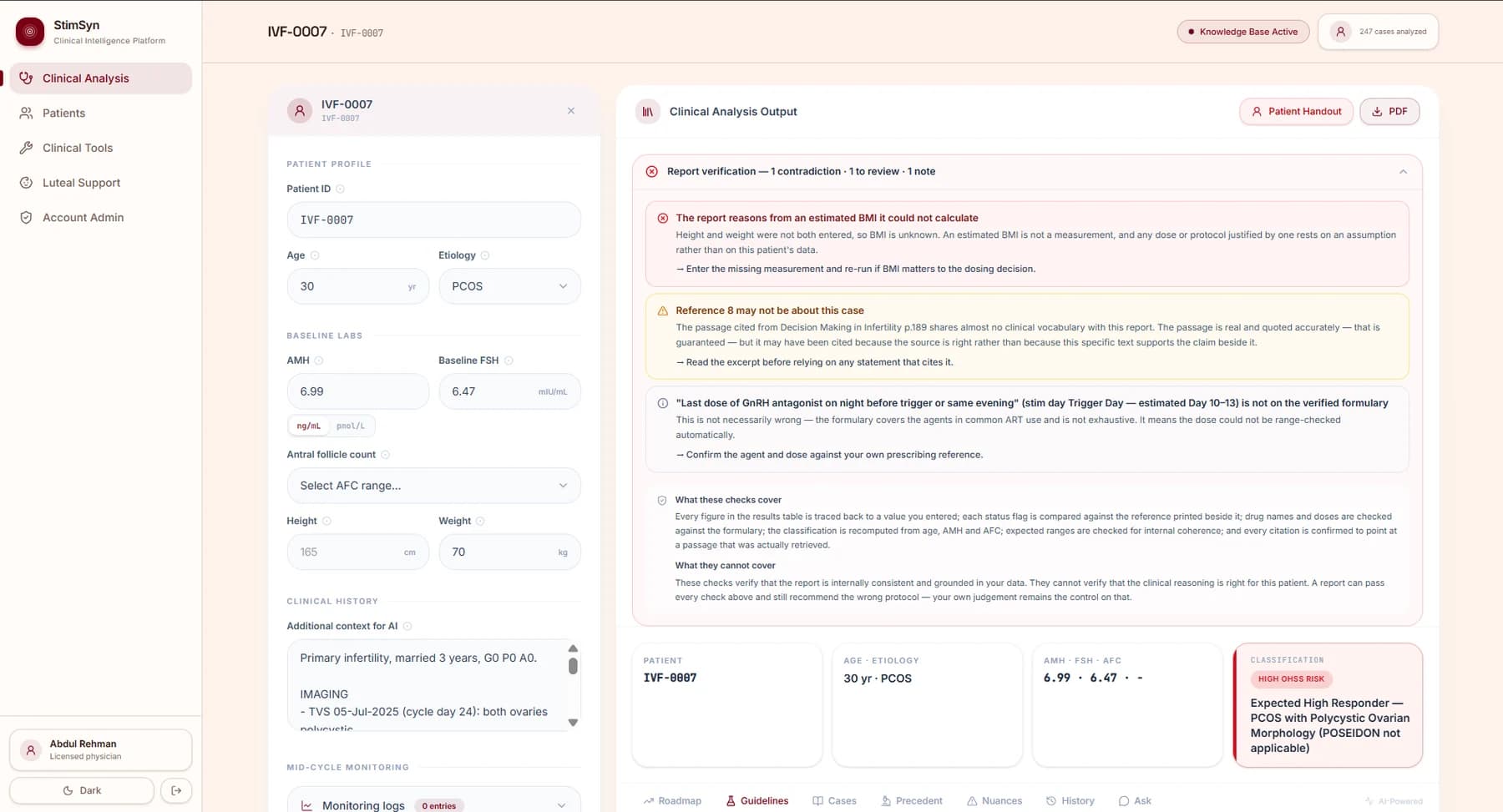
Analysis and Verification in One Workspace
The clinician enters the patient profile, baseline labs, ovarian reserve markers and history, and adds monitoring data as a cycle progresses. The generated analysis appears beside the data that produced it, with the checks run against it in the same view.
Those checks happen between generation and display: the platform recomputes the classification, compares each flag with the reference printed beside it, and confirms every figure traces back to something the clinician actually entered.
- Patient profile
- Ovarian reserve markers
- Clinical history
- Monitoring data
- Verification panel
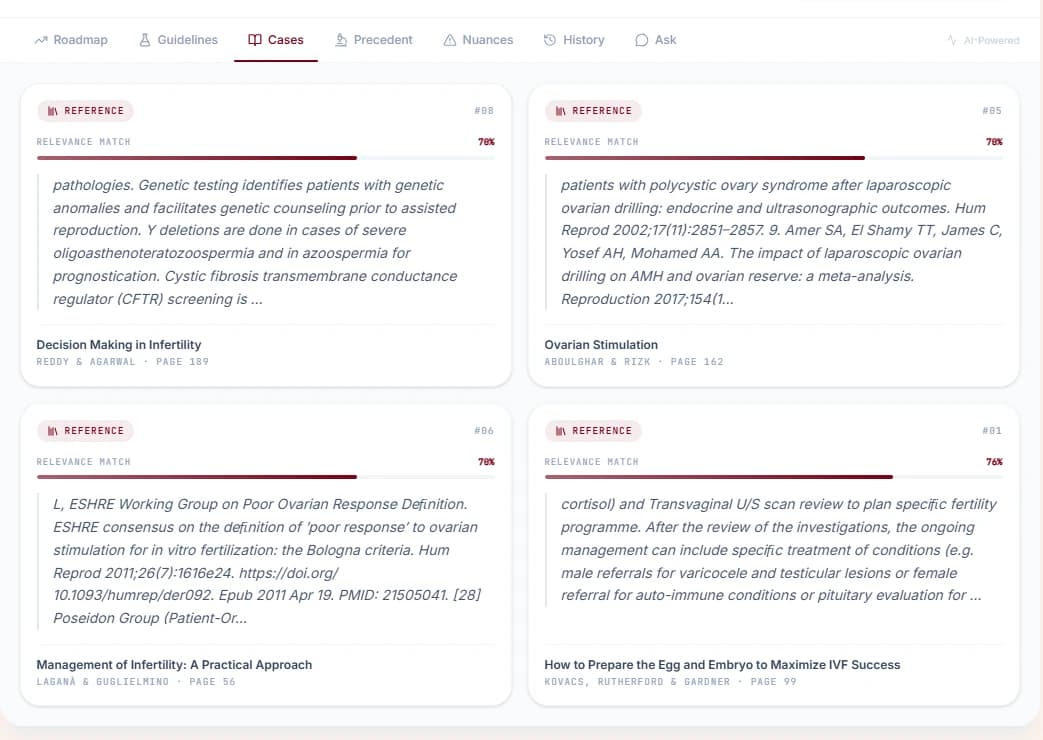
Sources Are Retrieved First, Then Bound to the Answer
Semantic retrieval searches the reference corpus before anything is written. The model chooses which retrieved passages are relevant; it is not permitted to author a book title, an edition or a page number. A citation can only point at a passage that was already retrieved.
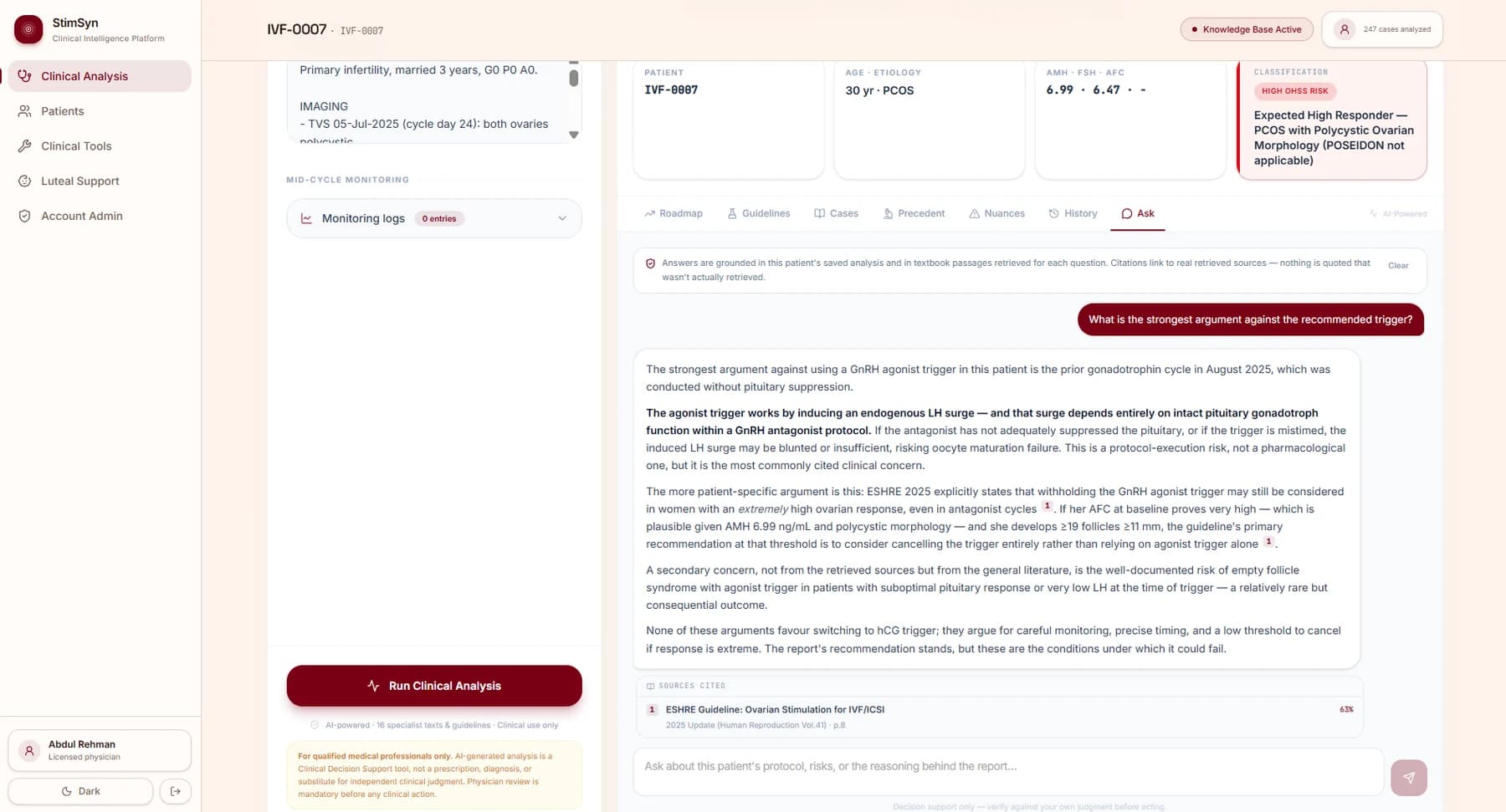
Grounded Follow-Up on the Individual Case
Once an analysis is saved the clinician can interrogate it. Questions are answered from that patient's own saved analysis and from passages retrieved for the question, with the sources listed underneath.
The conversation stays attached to the patient, so it is part of the case record rather than a chat window that forgets.
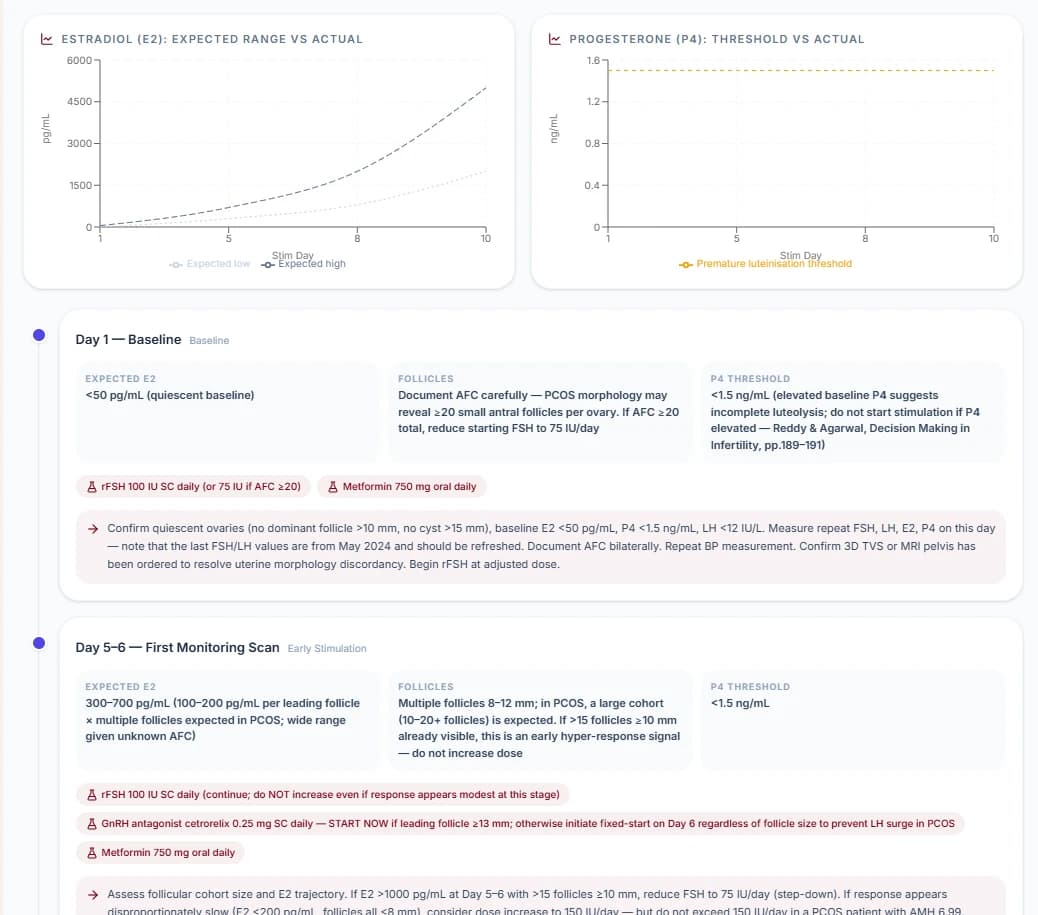
From a Static Report to an Ongoing Cycle Roadmap
The analysis extends into the cycle itself: milestones day by day, the expected ranges, the values actually recorded, and a signal when something drifts away from what was expected.
- Milestones
- Expected ranges
- Recorded values
- Threshold checks
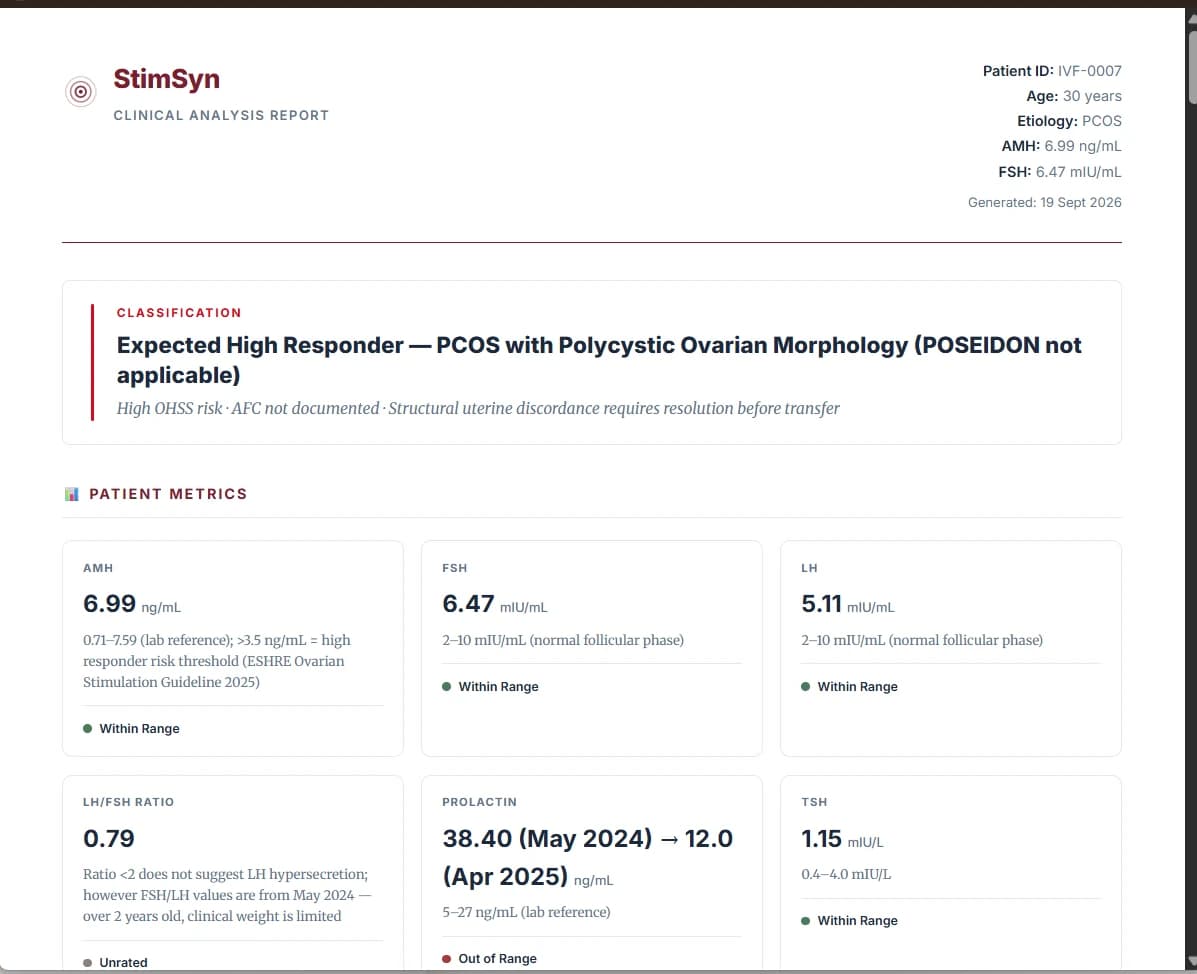
A Structured Report That Can Leave the Screen
The analysis becomes a branded multi-page PDF, with the verification information carried into the document rather than left behind in the interface. Saved reports stay on the patient record and can be opened again later.
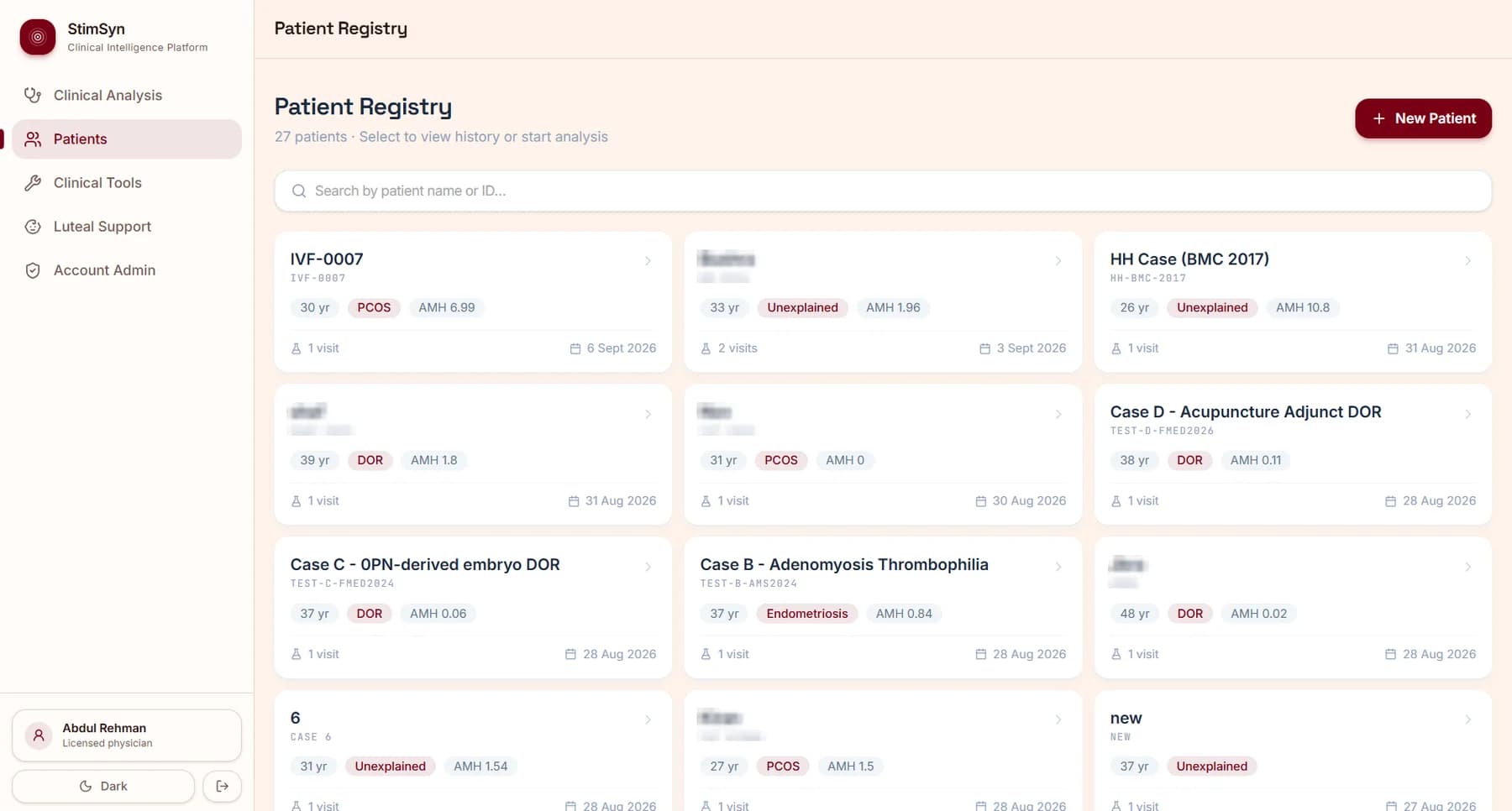
A Patient Record, Not a One-Off Form
Patients are saved rather than typed in fresh at every visit. Each record carries its visit history and the analyses produced for it, so a returning patient starts from what is already known about them.
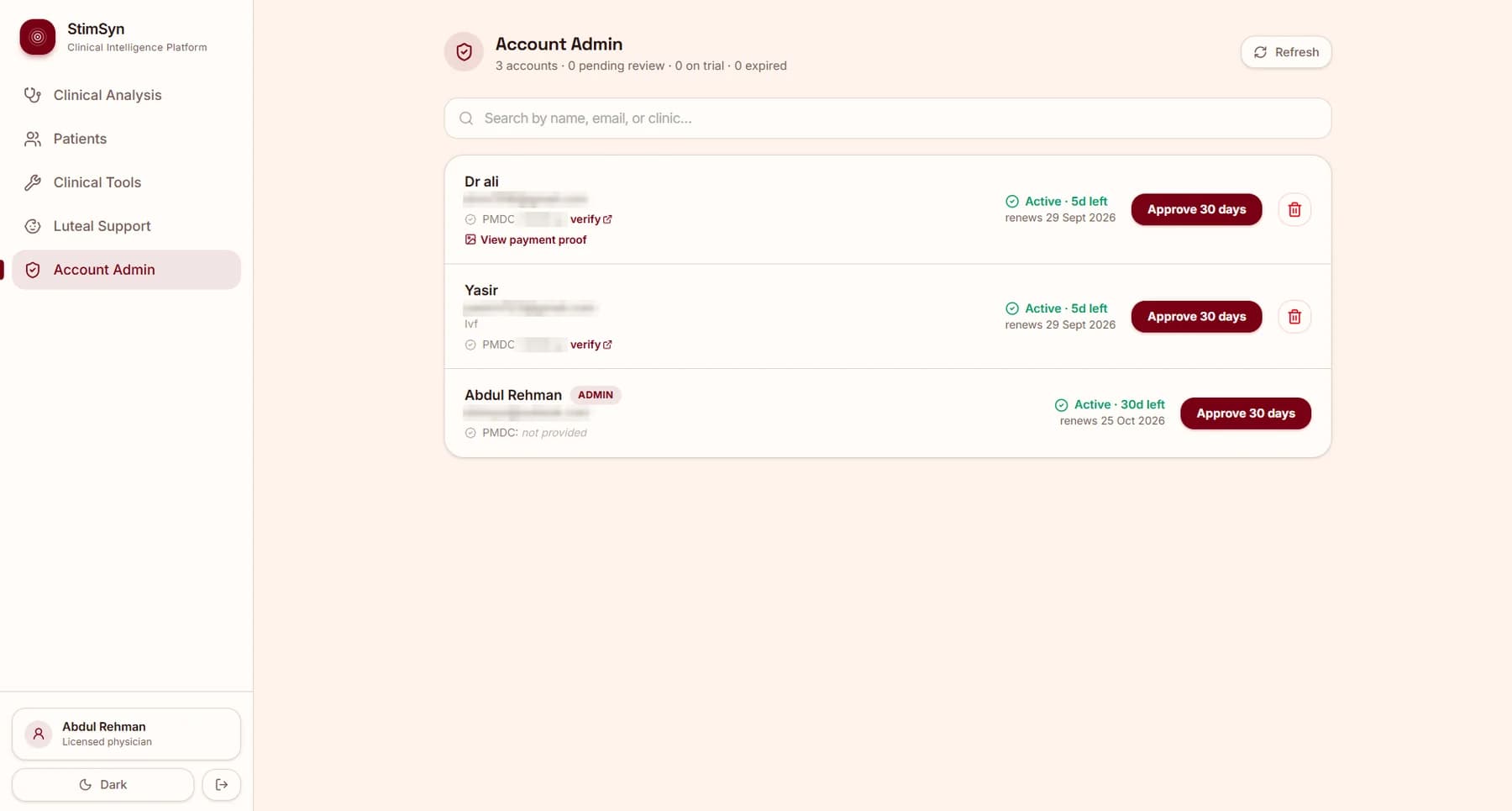
Built to Be Administered
Clinicians are approved before they get access, and accounts move through trial, active and expired states from inside the platform. No developer, no deploy.
- Clinician approval
- Access states
- Trials
- Subscriptions
- Renewals
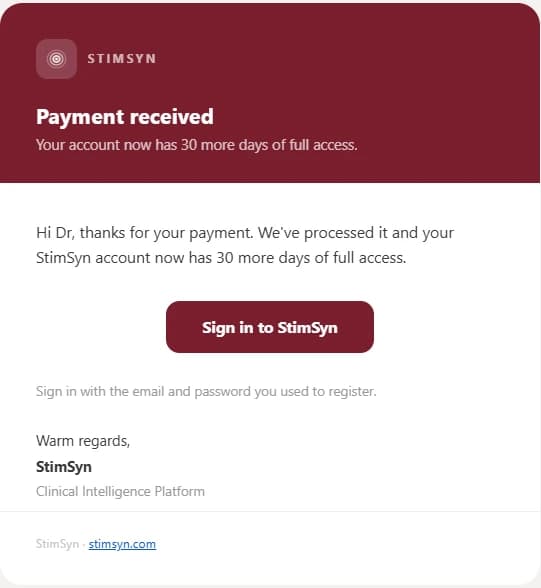
Automated Clinician Communication
A confirmed payment tells the clinician their access has been extended, in StimSyn's own branding. Nobody has to type it out.
StimSyn is a clinical decision-support tool for licensed medical professionals. Its checks confirm that a report is internally consistent, grounded in the entered data and connected to retrieved sources; they cannot confirm that the clinical reasoning is right for a given patient. It is not a prescription, not a diagnosis, and not a substitute for independent clinical judgment.
Have a similar business problem?
Your Business May Need More Than a Website Too.
Tell us how your business runs at the moment. We will look at where a connected website, some automation or a piece of custom software would take work off your plate.